
Not all paintless dent repair technicians are created equal. Sure, anyone can claim to fix hail damage or door dings, but the difference between an average PDR tech and a truly skilled one can mean the difference between a flawless restoration and a botched job that costs you more down the road.
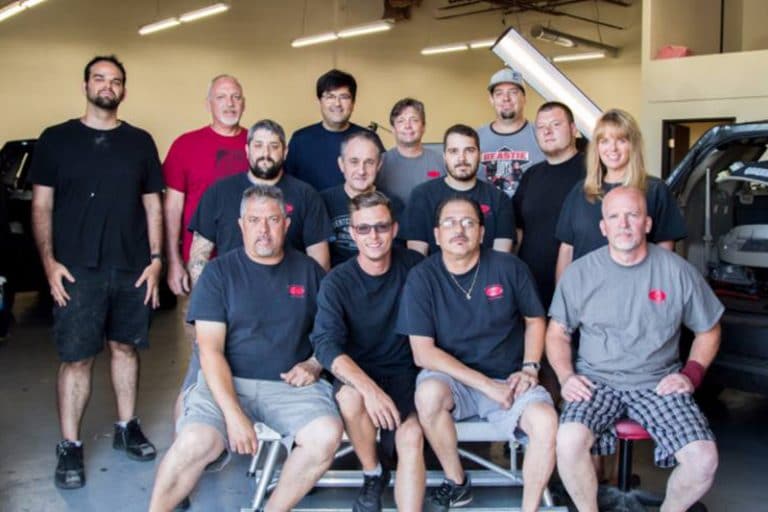
At Rocky Mountain Dent Services, we’ve been perfecting the art and science of paintless dent removal in Denver since 1998. Over the years, we’ve learned exactly what separates a competent technician from an exceptional one. Whether you’re evaluating a PDR shop for your vehicle or you’re curious about what goes into this specialized craft, here’s what we believe defines a great paintless dent repair technician.
Technical Skill and Precision Under Pressure
Paintless dent repair isn’t something you can learn from watching a few YouTube videos. It demands hands-on technical skill that takes years to develop. A great PDR technician must manipulate specialized tools with surgical precision, often working in tight spaces behind panels where visibility is limited.
Think about it: they’re essentially reshaping metal from the inside out, one careful push at a time. The margin for error is incredibly small. Push too hard in one spot, and you create a high point that’s just as noticeable as the original dent. Apply pressure at the wrong angle, and you risk cracking the paint, defeating the whole purpose of paintless repair.
What really sets top technicians apart is their ability to maintain this precision under pressure. When a major hailstorm rolls through the Denver Metro area, PDR shops get slammed with hundreds of damaged vehicles. The best techs don’t let a packed schedule compromise their work quality. They understand that rushing leads to mistakes, and mistakes lead to unhappy customers. At our shop, we’ve seen how maintaining steady hands and a focused mind, even during the busiest hail season, produces results that last a lifetime.
Patience and Attention to Detail
Here’s something most people don’t realize about paintless dent repair: a single repair can involve hundreds of individual pushes. Each one must be precisely placed and carefully executed. There’s no shortcut, no “good enough.” Either the dent is properly removed, or it isn’t.
This is why patience isn’t just a nice-to-have quality for PDR technicians, it’s essential. Some dents take minutes: others take hours. A technician who rushes through repairs will inevitably leave behind imperfections that show up in certain lighting conditions or become more obvious over time.
Attention to detail goes hand-in-hand with patience. Great technicians obsess over getting every square inch right. They’ll examine their work from multiple angles, under different lighting, looking for any subtle waves or irregularities that the average eye might miss. They treat every vehicle like it’s their own. When we say some people call PDR an art, we mean it, the level of detail required rivals that of any skilled craftsman. Our techs at Rocky Mountain Dent Services take genuine pride in restoring vehicles to like-new condition, because cutting corners simply isn’t in their DNA.
In-Depth Knowledge of Metal and Paint Behavior
PDR isn’t just about pushing dents out. It requires a deep understanding of how different metals behave under stress and how automotive paint responds to manipulation.
Modern vehicles use various types of metal, steel, aluminum, and high-strength alloys, each with different properties. Aluminum, for example, has a “memory” that behaves differently than steel. It requires a different touch and technique. A technician who doesn’t understand these differences can easily cause more harm than good.
Then there’s the paint. Automotive finishes today are more flexible than they were decades ago, but they still have limits. A skilled technician knows exactly how far they can push without cracking or chipping the clear coat. They understand how temperature affects paint flexibility, working in cold conditions requires different considerations than working in the heat of a Denver summer.
The best technicians also recognize when PDR isn’t the right solution. If the metal has been stretched too severely or the paint is already compromised, they’ll be honest about it rather than attempting a repair that won’t hold up. This kind of expertise only comes from years of hands-on experience combined with ongoing education about evolving vehicle materials and paint technologies.
Proper Training and Certification
Experience matters, but so does formal training. The PDR industry has evolved significantly, and reputable technicians invest in comprehensive training programs to master both foundational techniques and advanced methods.
Proper certification demonstrates that a technician has met industry standards and committed to their profession. It’s not just about knowing the basics, certified technicians have typically trained on various vehicle types, damage scenarios, and tool systems. They’ve learned to handle everything from minor door dings to extensive hail damage across entire vehicle bodies.
At Rocky Mountain Dent Services, our technicians have extensive training specifically focused on hail damage repairs. This specialization matters because hail damage presents unique challenges: hundreds or even thousands of dents across multiple panels, each requiring individual attention. We combine old-world craftsmanship with highly specialized tools because we understand that mastering PDR requires both traditional skills and modern techniques.
When choosing a PDR shop, don’t hesitate to ask about technician training and certifications. A confident shop will be happy to share their credentials, and a well-trained technician is your best assurance that the repair will be done right the first time.
Strong Problem-Solving Abilities
No two dents are exactly alike. They vary in size, depth, location, and the type of metal involved. What worked perfectly on yesterday’s repair might not be the right approach today. That’s why problem-solving ability is such a critical trait for PDR technicians.
Consider a dent located behind a body line, a raised crease in the vehicle’s design. Accessing and repairing this dent requires creative tool selection and unconventional angles. Or think about damage on a curved panel versus a flat one: the approach differs significantly. A great technician assesses each situation, considers multiple options, and selects the best strategy.
Problem-solving also extends beyond the technical work itself. When a repair proves more complex than initially expected, skilled technicians adapt rather than force a suboptimal solution. They might need to remove interior panels or find alternative access points. Sometimes they’ll use a combination of pushing from behind and glue-pulling from the front, a technique called “push to paint” or “push to prep” when preparing severely damaged panels.
We’ve found that the technicians who excel in this field are naturally curious. They enjoy the puzzle aspect of PDR and take satisfaction in figuring out the cleanest path to a perfect repair.
Excellent Customer Communication Skills
Technical skill means little if a technician can’t communicate effectively with customers. Dealing with vehicle damage, especially after a stressful hailstorm, is frustrating for car owners. They want to understand what happened to their vehicle, what the repair process involves, and how long it will take.
Great PDR technicians explain the process in terms customers can understand. They set realistic expectations about timelines and outcomes. If a particular dent can only be improved to 90% rather than 100%, they communicate that upfront rather than overpromising.
Communication also involves navigating the insurance side of things. At Rocky Mountain Dent Services, we believe in making the entire experience as convenient and transparent as possible. We communicate directly with insurance companies on our customers’ behalf, help file claims, and even arrange free rental cars during repairs. When we say “zero out of pocket,” we mean it.
Eventually, customer communication reflects a technician’s integrity. We’re a family-owned business that’s been serving the Denver Metro region for over two decades, and our reputation depends on honest, clear communication every step of the way. Your car is in good hands when you work with technicians who genuinely care about your experience, not just the repair itself.
Conclusion
A great paintless dent repair technician combines technical precision, deep material knowledge, proper training, creative problem-solving, endless patience, and strong communication skills. It’s a rare combination, which is why truly excellent PDR work stands out.
If you’re dealing with hail damage or dents in the Denver area, we’d love to show you what quality PDR looks like. Contact Rocky Mountain Dent Services for a free estimate and experience the difference that skilled craftsmanship makes.
